Most SEO teams learn about major crawler changes the same way everyone else does: a blog post, a documentation update, or a vague announcement weeks after the fact.
By then, the damage or opportunity has already passed.
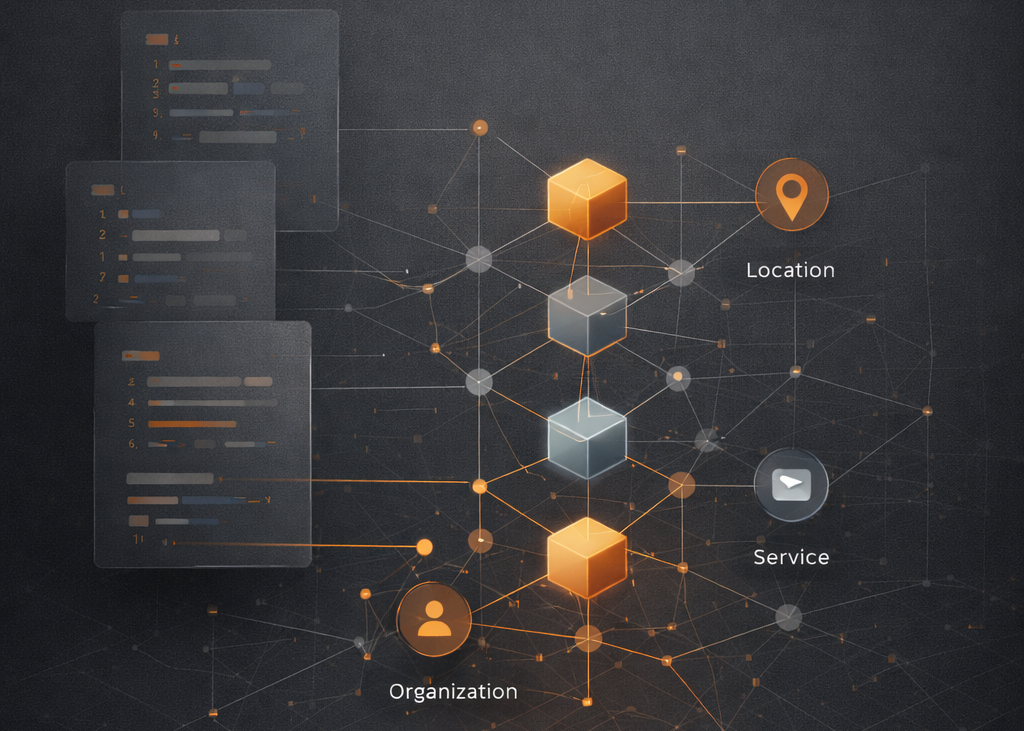
But search engines and AI systems don't start with announcements. They start with requests hitting your server.
Long before Google documents a new crawler behavior, long before dashboards show anomalies, and long before rankings move, the truth is already written line by line in your log files.
This article explains:
- Why log file analysis is becoming critical in the age of AI search
- How AI crawlers behave differently from classic search bots
- How to fingerprint AI crawlers at the server level
- How to analyze crawl depth and intent
- How to detect AI crawler activity before it's officially acknowledged
- How to build a basic bot behavior classifier
- How to operationalize this data for SEO and AI visibility strategy
This is not SEO reporting. This is search intelligence from the wire level up.
Why Log Files Matter More in the AI Era
Traditional SEO relies on reported data:
- Search Console
- Crawling stats
- Indexing coverage
- Rank tracking
AI-driven search breaks this model.
Many AI systems:
- Crawl selectively
- Retrieve content on demand
- Do not index in the traditional sense
- Do not fully report their activity
If you wait for official tooling, you are weeks behind reality.
Log files show:
- Who accessed your site
- When
- How often
- How deep
- In what patterns
This is the earliest signal you will ever get.
What Makes AI Crawlers Different From Classic Bots
Classic crawlers (Googlebot):
- Methodical
- Sitemap aware
- Coverage oriented
- Consistent over time
AI crawlers behave differently:
- Opportunistic
- Query driven
- Depth focused, not breadth focused
- Burst based rather than continuous
Understanding these differences is the key to detection.
Known AI Crawlers (and Why Names Aren't Enough)
Some AI-related user agents are publicly known:
- GPTBot
- Google Extended
- Bing AI-related crawlers
But relying on user-agent strings alone is insufficient.
Why?
- User agents can be spoofed
- New crawlers appear before names are documented
- Some AI systems reuse infrastructure shared with other bots
This is why behavioral fingerprinting matters more than identification strings.
Server-Level SEO Intelligence: What Logs Actually Tell You
A standard access log gives you:
- IP address
- Timestamp
- HTTP method
- Requested URL
- Response code
- User agent
- Referrer (sometimes)
From this, you can infer:
- Crawl intent
- Content prioritization
- Retrieval strategies
- AI vs indexer behavior
This is far richer than Search Console ever will be.
Step 1: Isolating Suspected AI Crawler Traffic
The simplest starting point is filtering known AI bots.
Example:
grep "GPTBot" access.log | awk '{print $7}'This shows:
- Which URLs are being accessed
- Frequency
- Patterns over time
But this is only step one. Real insight comes from what they do next.
Step 2: Bot Fingerprinting Beyond User Agents
Bot fingerprinting looks at behavioral traits, not labels.
Key dimensions include:
1. Crawl Depth
How deep into the site does the bot go?
- Does it stop at top-level pages?
- Does it target specific sections?
AI crawlers often:
- Skip category pages
- Go directly to long-form content
- Access documentation, guides, and explainers
2. URL Selection Patterns
AI crawlers prefer:
- Text-heavy pages
- Informational content
- Evergreen resources
- Pages with definitions and structure
They often avoid:
- Filtered URLs
- Faceted navigation
- Parameter-heavy pages
This is not random crawling.
3. Request Timing
Classic bots crawl steadily.
AI crawlers often:
- Appear in short bursts
- Make rapid sequential requests
- Then disappear for days or weeks
This aligns with model refresh cycles, not indexing cycles.
Step 3: Crawl Depth Analysis
Crawl depth tells you intent.
Example depth categories:
/→ homepage/blog/→ section level/blog/ai-search-engineering/→ content level/blog/ai-search-engineering/log-analysis.html→ deep retrieval
AI crawlers disproportionately favor deep content URLs.
This suggests:
- Retrieval for answer generation
- Not broad site discovery
Step 4: Building a Log Parser (Python)
To analyze behavior at scale, you need structured data.
Simple Log Parser Example
import re

log_pattern = re.compile(
    r'(?P\S+) .* "(?PGET|POST) (?P\S+) .*" \d+ .* "(?P[^"]+)"'
)

def parse_log_line(line):
    match = log_pattern.search(line)
    return match.groupdict() if match else None
Once parsed, you can:
- Group by user agent
- Group by IP
- Analyze URL patterns
- Track depth distribution
This is where patterns emerge.
Step 5: Bot Behavior Classification
Now we classify bots not by name but by behavior profile.
Example features:
- Pages per session
- Average URL depth
- Time between requests
- Ratio of HTML vs non-HTML requests
- Revisit frequency
Simple Bot Classifier Logic
def classify_bot(behavior):
    if behavior["avg_depth"] > 3 and behavior["burst_requests"] > 10:
        return "AI_Retrieval_Bot"
    if behavior["steady_rate"] and behavior["sitemap_hits"]:
        return "Indexer_Bot"
    return "Unknown"
This approach detects new AI crawlers even when:
- User agent is unfamiliar
- IP range is undocumented
That's the real advantage.
Step 6: Detecting AI Crawlers Before Public Disclosure
Historically, AI crawler behavior shows up in logs:
- Weeks before documentation updates
- Months before SEO blogs catch on
Early signals include:
- New user agents with shallow crawl breadth
- Repeated access to the same explanatory pages
- Focus on specific topics rather than site wide coverage
- High revisit rate on authoritative pages
If you see these patterns, you are observing model ingestion, not indexing.
Why AI Crawlers Care About Depth, Not Coverage
AI systems don't need to index your whole site.
They need:
- Reliable explanations
- Definitions
- Structured knowledge
- Fact-dense content
So they retrieve:
- The best page
- On a given topic
- Repeatedly
This explains why some pages see:
Disproportionate AI crawler activity
While others see:
None
Defensive Strategy: Protecting Your Content
Log analysis helps you:
- See which pages AI systems are pulling from
- Detect sensitive content access
- Decide what to allow or restrict
- Adjust robots and headers intelligently
This is critical for:
- Proprietary research
- Premium content
- Regulated industries
You can't protect what you can't see.
Offensive Strategy: Engineering for AI Retrieval
Offensively, log insights show you:
- What AI systems value
- Which content formats are retrieved
- Which sections attract repeated access
This allows you to:
- Create more retrieval optimized pages
- Strengthen high-value sections
- Improve structure where AI crawlers already focus
You stop guessing and start aligning.
Why Google Will Always Be Late to Tell You
Google reports:
- What it wants webmasters to know
- When it's safe to disclose
- After behavior stabilizes
But infrastructure always moves first.
Google's reports:
- Delayed
- Filtered
- Curated
Log files are:
- Real-time
- Unfiltered
- Unopinionated
They don't wait for blog posts.
The Strategic Shift: From SEO Tools to Infrastructure Awareness
The future of advanced SEO is not more dashboards.
It's:
- Server access
- Log pipelines
- Behavior analysis
- AI system observation
Teams that understand this will:
- Detect changes earlier
- Adapt faster
- Preserve visibility longer
Everyone else will react late.
Key Takeaways
- Log files reveal AI crawler behavior weeks before official documentation
- AI crawlers exhibit depth focused, burst-based patterns unlike traditional indexers
- Behavioral fingerprinting detects new crawlers regardless of user-agent strings
- Python based log parsing enables scalable bot classification
- Crawl depth analysis reveals retrieval intent vs broad indexing
- Server level intelligence provides the earliest signal for AI search changes
Final Thoughts: Logs Are the Earliest Truth in AI Search
AI search is changing faster than public documentation can keep up.
If you rely on:
- Official announcements
- Tool updates
- Community chatter
You are downstream of reality.
Log file analysis puts you upstream where behavior begins.
In the age of AI-driven discovery, whoever sees first, wins first.
And the first signal is always: a request hitting your server.