AI Crawler Intelligence Engine – Behavioral Retrieval Detection Platform_
Behavior-based detection system designed to identify AI-style retrieval patterns from raw server logs using deterministic behavioral scoring.
Project Overview
AI systems no longer crawl the web like traditional search engines.
They retrieve content differently with deeper navigation patterns, burst request behavior, structural targeting, and selective extraction.
Traditional analytics tools measure traffic volume and user agents. They do not measure behavioral retrieval signals the patterns that differentiate AI retrieval from standard indexing bots.
The AI Crawler Intelligence Engine was built to solve that gap.
It ingests raw server logs, models crawl behavior, computes deterministic AI-likelihood scores, and visualizes behavioral clustering without relying on external LLM APIs.
This is not a bot filter. It is a behavioral retrieval intelligence engine.
What It Does
The system ingests:
- Raw server log files
- IP-based crawl sessions
- Request paths and timestamps
- User agents (for labeling, not scoring)
Then computes:
- AI Likelihood Score (0–100)
- Burst Activity Index
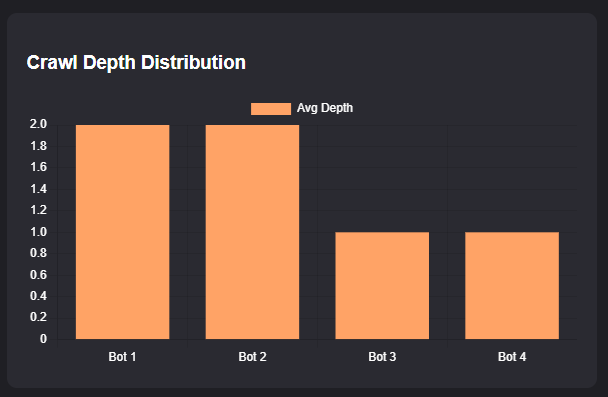
- Crawl Depth Modeling
- URL Repetition Ratio
- HTML vs Resource Request Ratio
- Behavioral Clustering Visualization
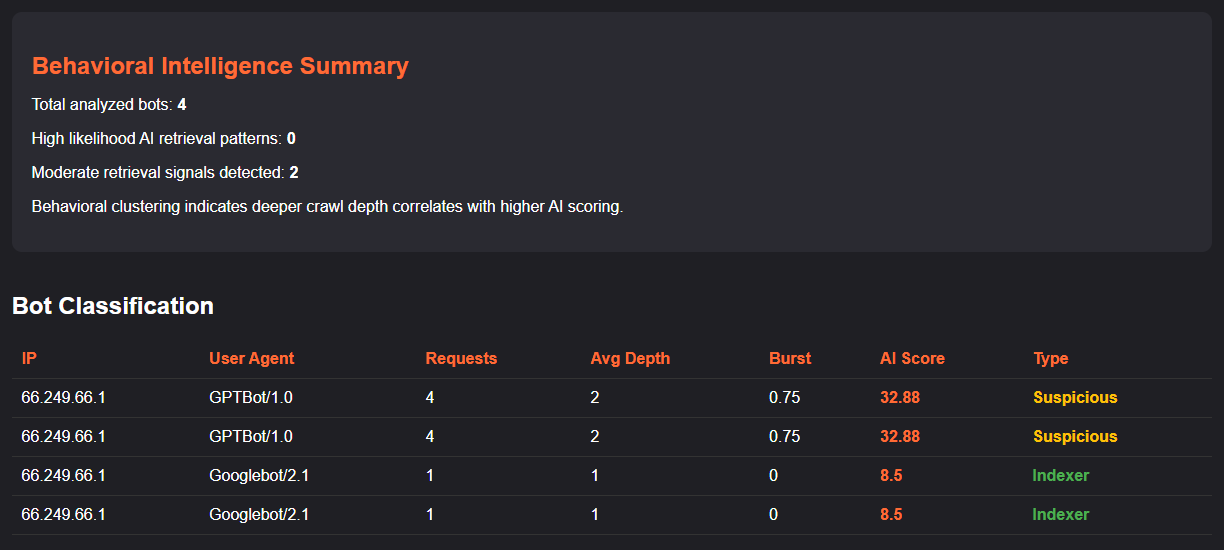
- Intelligence Narrative Summary
Every score is generated from a deterministic backend scoring engine the frontend only renders results.
No heuristics based purely on user-agent strings.
Core Capabilities
-
Behavioral Crawl Modeling
Analyzes average URL depth, burst rate, repetition patterns, and structural navigation behavior per crawler.
-
Deterministic AI Scoring Engine
Computes a weighted AI-likelihood score based on measurable behavioral signals.
-
Burst Activity Detection
Identifies rapid, dense request patterns that often correlate with AI retrieval systems.
-
Depth vs Score Correlation Analysis
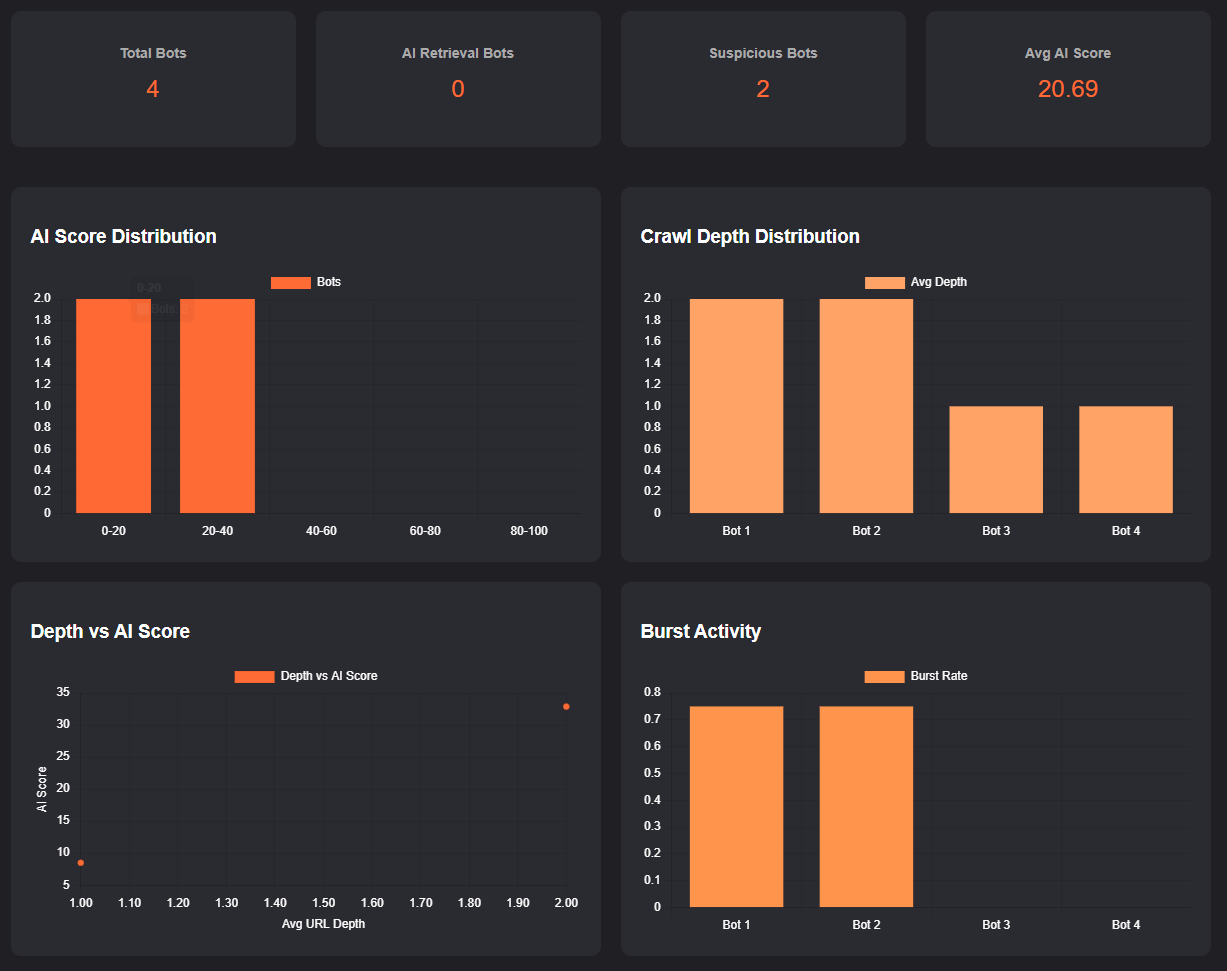
Visualizes the relationship between crawl depth and AI scoring through clustering scatter plots.
-
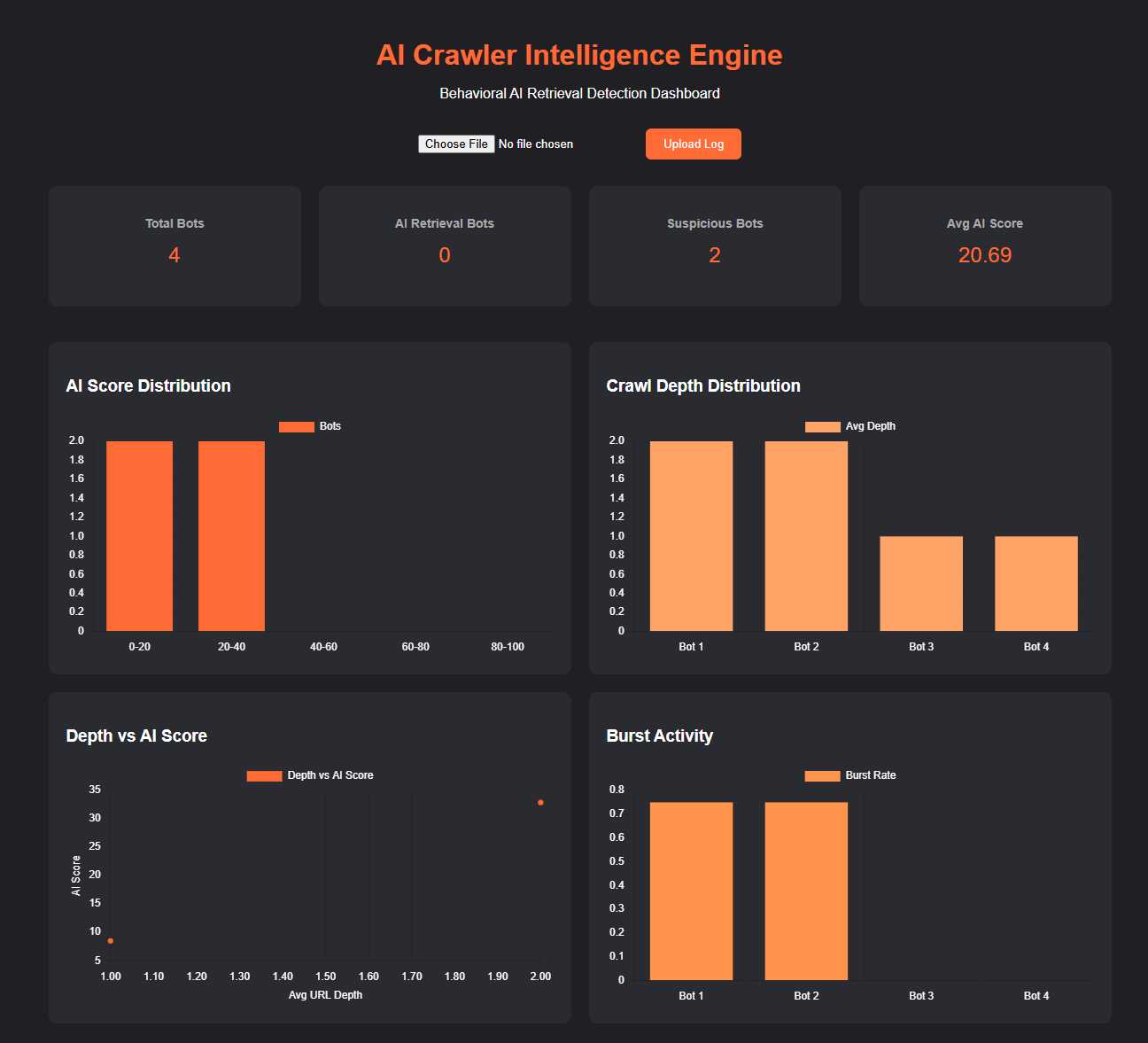
Behavioral Intelligence Dashboard
Displays score distribution, burst activity, depth modeling, and bot classification in a layered dark-mode interface.
-
Explainable Intelligence Layer
Generates structured narrative summaries explaining detected behavioral signals.
-
Local-First Architecture
Runs entirely on FastAPI + PostgreSQL without third-party AI APIs or black-box models.
The Challenge
AI systems increasingly retrieve and synthesize content rather than index it traditionally.
They:
- Traverse deeper internal URLs
- Request content in bursts
- Target structured pages
- Extract HTML-heavy responses
- Avoid traditional crawl signatures
Most analytics systems cannot differentiate between traditional search indexing bots vs AI-style retrieval crawlers.
There was no lightweight, self-hosted system to measure AI-native crawl behavior using deterministic modeling.
The Solution
Built a full-stack behavioral intelligence engine composed of:
Backend:
- FastAPI scoring engine
- Deterministic behavioral modeling logic
- PostgreSQL persistence layer
- Session-based crawl aggregation
- Structured scoring architecture
Frontend:
- Vanilla JavaScript dashboard
- Chart.js behavioral visualizations
- Black/orange intelligence UI
- Score clustering histogram
- Depth vs score scatter correlation
- Burst activity visual modeling
- Intelligence narrative panel
The system enforces strict backend authority scoring logic is never manipulated on the client side.
Why It Matters
As AI retrieval systems grow, website owners will need to understand:
- Who is retrieving their content
- How deeply AI systems traverse their structure
- Whether burst patterns indicate extraction behavior
- How AI-style crawlers differ from indexers
This engine provides a measurable framework for detecting AI-native retrieval behavior. It is designed as a proof-of-concept foundation for behavioral AI detection infrastructure.
Future Expansion
- Real-time log streaming ingestion
- ASN/IP enrichment intelligence
- Retrieval fingerprint clustering
- AI crawler risk scoring layer
- Per-upload historical comparison
- Anomaly detection modeling
- SaaS-ready multi-tenant dashboard
- API-based intelligence access
Project Positioning Statement
This project represents the architectural foundation for behavioral AI retrieval detection shifting from user-agent filtering to deterministic crawl intelligence modeling.
Project Details
-
Category AI Crawler Detection
-
Architecture Full-Stack
-
Year 2026
Tech Stack
Project Gallery